
Cloud computing provides flexible backup options, permitting you to scale up as your backup grows. It offers a different setting for your knowledge, preventing a single level of failure. For occasion, if you own a streaming platform and are looking for an ideal media storage solution, cloud storage options offer a combination of reliability and scalability. Cloud suppliers deal with the bodily security of and upgrades to the computing resources’ underlying hardware.
- Edge devices process workloads at the edge of a computing network, similar to computing sources nearer to data sources or in distant areas from a central information center.
- Organizations must carefully consider their particular wants and select the computing model—or a mix thereof—that finest aligns with their goals.
- Edge computing in healthcare allows important purposes like distant affected person monitoring and medical imaging to deal with knowledge immediately on the edge.
- Two outstanding contenders, edge computing and cloud computing, provide powerful options for processing and managing information, but function beneath distinct paradigms and cater to particular needs.
- For instance, scanners can verify the condition of a automotive being constructed as it moves alongside an meeting line, helping users improve processes and guarantee security.
Edge computing seeks to deal with these points by decentralizing processing and inserting computational assets closer to the end customers or gadgets that generate the data. These hybrid eventualities demonstrate how edge and cloud computing can work together edge computing definition to deliver complete options that meet diverse business needs. By implementing these security measures,organizations may help shield their edge computing infrastructure and make certain the confidentiality,integrity,and availability of their information. Understanding the distinct functionalities of edge and cloud computing is essential for making informed technology decisions.
Understanding Cloud Computing: Models, Benefits, And Real-world Applications
This method reduces the need to transmit large datasets across networks, thereby minimizing latency and bandwidth usage. By processing information domestically, edge computing enhances the speed and effectivity of information dealing with, making it ideal for functions that require real-time information processing. Cloud computing is characterised by its centralized strategy, the place data is processed and stored in remote servers, often referred to as overfitting in ml information facilities. These servers are accessed through the web, offering scalable resources and companies on demand.
After that, use cloud providers such as AI and machine learning to get new views and enhance decision-making. Since the information is collected and analyzed at the edge, it’s important to include the security of the IoT gadgets linked to the edge units and for the sting devices themselves. These units comprise useful knowledge, however they are also networking elements that, if exploited, may compromise other gadgets with shops of useful assets. Exploring the advantages and disadvantages of every computing model is essential for organizations looking to choose one of the best approach based on their needs. For example, private 5G networks or community slicing technology can be used to create safe, isolated channels for specific functions, stopping unauthorized access to delicate data and applications.

Hybrid models are becoming increasingly in style as they leverage the strengths of both edge and cloud computing. For instance, edge computing can handle preliminary knowledge processing, while cloud computing can handle the storage and deeper analysis of that information later on. Subsequently, the complex data generated by these linked gadgets has exceeded network and infrastructure capacities, making it challenging to drive actionable insights from it. The sheer quantity requires more extensive and expensive connections to data centers and the cloud, inflicting latency and bandwidth points. It offers a way in which information is processed and evaluated closer to the point of its creation, thereby reducing latency.
Cloud computing has turn into a cornerstone of many businesses’ IT infrastructures, providing a versatile and efficient way for them to store, manage, and process information remotely. Before delving into its mechanisms and advantages, a definition of what cloud computing is shall be https://www.globalcloudteam.com/ useful. Edge computing in smart cities facilitates localized processing for site visitors administration, surveillance, and useful resource usage. This method permits city infrastructure to respond immediately to altering circumstances, improving efficiency and security in city environments. These benefits make cloud computing an integral part of contemporary IT strategies, offering the flexibleness and energy needed to assist a variety of functions and providers. For example, a sensible manufacturing facility might use edge gadgets to gather and analyze knowledge from sensors on the manufacturing facility flooring in real-time.
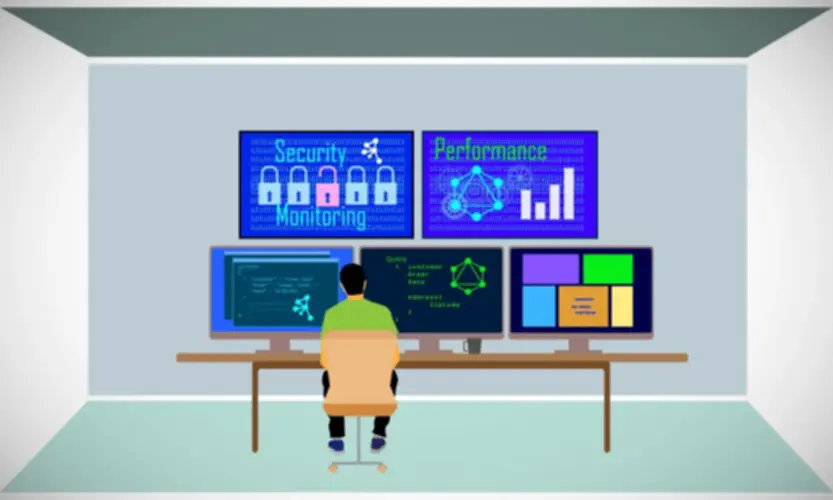
Frequent Use Circumstances for Edge Computing Edge computing is invaluable in eventualities the place real-time analytics and decision-making are essential, such as automated factories, robotics, or point-of-sales retail locations. It synergizes with IoT, together with sensible residence devices and industrial units, which require quick knowledge processing to carry out optimally. Autonomous vehicles also depend on edge computing for the fast processing essential to make split-second selections. Moreover, cellular computing and local content material distribution networks profit from edge processing to ship faster companies to customers. Edge computing advantages in alleviating knowledge security and privateness challenges, in addition to the decrease latency that permits better immediacy around analytics.
Edge Computing Use Cases
Cloud providers offer a excessive diploma of flexibility, meaning customers can scale providers according to demand, and pay just for the assets they use, which optimizes price and effectivity. Knowledge is primarily processed and saved in large data facilities operated by cloud service providers. Customers work together with these centralized services over the internet, resulting in potential latency points, particularly for time-sensitive functions. In the quickly evolving panorama of data technology, the ideas of edge computing and cloud computing have emerged as highly effective paradigms that cater to the varied needs of companies and consumers alike. While each goal to boost efficiency, efficiency, and scalability, they function on different ideas and architectures. This article delves deep into edge computing and cloud computing, inspecting their key differences, benefits, disadvantages, and use cases.
This method reduces delay and helps make decision-making quicker, especially for things that need solutions quickly, like autonomous vehicles or industrial automation. Many consultants view edge computing as the method ahead for cloud computing, providing progressive solutions for real-time data processing and localized operations. Cloud computing is a mannequin that allows customers to entry and retailer knowledge and applications over the web, rather than relying on local storage and processing power. By utilizing remote servers hosted in data centers, cloud computing offers customers with the power to make use of computing sources on-demand, enabling scalability and adaptability. Conventional cloud computing depends closely on centralized data centers, the place all the computation and information processing happen. Together, these applied sciences allow companies to balance the power of cloud service providers with the environment friendly processing of edge devices course of, making data processing seamless and optimized.
This comparability pits edge computing vs cloud computing, exploring their key variations, use cases, similarities and extra. For instance, an autonomous car must course of info in real-time to determine objects in its path, making edge computing an ideal solution. Likewise, IoT gadgets in industrial settings can monitor gear and set off alerts without counting on a cloud-based system. General, edge computing enhances massive knowledge functions by prioritizing speedy decision-making and reducing bandwidth usage. Definition of Edge Computing Edge computing refers back to the computational processes being carried out close to the data source, rather than counting on a central knowledge middle miles away.

Carefully evaluating components like latency, processing pace, security, scalability, and cost can help you make the most informed choice. This strategy provides quite a few advantages, notably for applications requiring low latency and immediate response times. Edge computing empowers them to process information regionally, enabling swift decision-making and making certain security on the highway.
Edge computing presents a special method to information safety by localizing knowledge processing. By preserving information closer to its supply, edge computing minimizes the amount of sensitive information that needs to be transmitted over networks. This localized processing reduces the danger of data breaches and enhances information safety, making it a most well-liked selection for applications the place information privacy is essential, corresponding to in healthcare and monetary companies. When it involves data processing and bandwidth, cloud computing is well-suited for duties that contain large-scale knowledge evaluation and storage. By centralizing data in remote data centers, cloud computing can efficiently handle extensive knowledge processing and supply robust storage assets.